






“Edinburgh in autumn has a particular kind of quiet that settles over the city. The tourist buses thin out, the light turns gold and grey at the same time, and Edinburgh seems to remember that it is, above all, an old place built on an extinct volcano.”
There is a particular kind of quiet that settles over Edinburgh in autumn. The tourist buses thin out, the light turns gold and grey at the same time, and the city seems to remember that it is, above all, an old place built on an extinct volcano. I have visited in the height of summer, when the Fringe swallows every street corner, and I have come back in autumn just to see what the city looks like when it exhales. This is that version of Edinburgh.
What the Weather Actually Does
Autumn in Edinburgh runs from September through November, and it is not one season so much as three different moods stitched together. September still carries some warmth from summer, with daytime highs often reaching into the low sixties Fahrenheit, or around 17°C on a good day. By November, that has dropped considerably, with average highs closer to 8 9°C and the wind picking up off the North Sea.
October sits in between, and it is worth knowing that it is also one of the wettest months of the year here. Rain does not usually arrive as a downpour. It comes as drizzle, on and off, sometimes for most of the day, which locals barely register but which catches visitors off guard if they packed for a single dramatic storm instead of a persistent damp.
Pack layers, not one big coat. A waterproof shell, a warm jumper underneath, and shoes that can handle wet cobblestones will do more for you than any single heavy jacket. Mornings can start close to freezing in late November, then climb ten degrees by early afternoon.
The City Before It Wakes Up
There is a version of Edinburgh that only exists between about six and eight in the morning, and autumn is the best time to catch it. The Royal Mile, usually thick with people by midday, is nearly empty. Mist sits low around the Castle, sometimes hiding the top of it entirely, and the streetlights are still on even though it is technically morning.
I remember standing near St Giles’ Cathedral on one of these mornings with a coffee that was too hot to drink properly, watching a single street cleaner work his way down the cobbles. It was the kind of moment that does not photograph well but stays with you anyway.
Coffee culture here has grown well beyond tourist expectations. Small independent shops tucked into closes off the main streets tend to open early and serve better coffee than the chains on the high street. If you are an early riser, this is genuinely one of the best reasons to be one in Edinburgh.
Wandering the Old Streets Without a Plan
Edinburgh’s Old Town rewards people who get lost in it on purpose. The Royal Mile gets all the attention, and fairly so, but the closes branching off it are where the city’s history is easier to feel. These narrow alleyways, some barely wide enough for two people to pass, lead to hidden courtyards, old graveyards, and views you would not find on a map.
Victoria Street, with its curved row of colourful shopfronts, is especially striking in autumn light. Grassmarket, sitting just below the Castle, has a different energy in the cooler months, quieter and less performative than in summer.
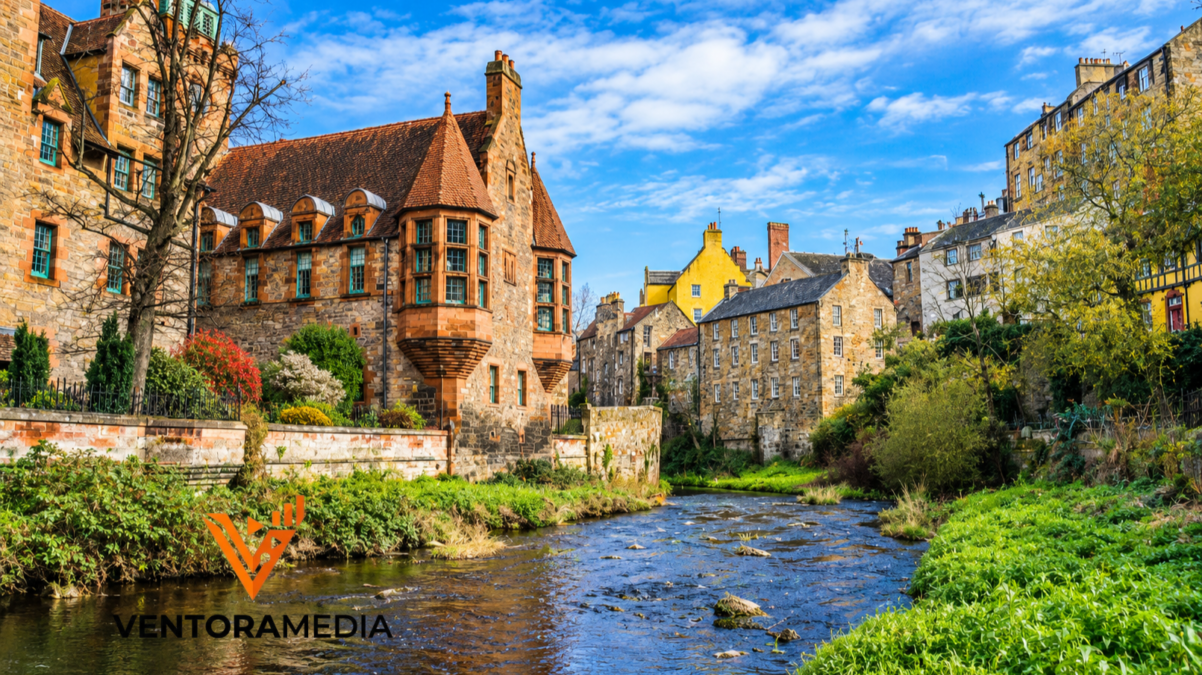
The Old Town itself sits on the remains of an extinct volcano, which explains the steep hills and dramatic drops that make walking here feel more like an adventure than a stroll. Autumn adds a further layer: as the trees along Princes Street Gardens and around the Meadows turn, the contrast between old grey stone and warm orange leaves is one of the more understated beauties of the season.
Where the City Warms Up in the Evening
If the mornings in Edinburgh are about mist and quiet, the evenings in autumn are about pubs. This is not incidental. The pub, in Edinburgh, is where the cold outside gets negotiated with something warm inside, usually a dram of whisky or a pint of cask ale.
A few worth knowing about, all with real history behind them rather than manufactured charm:
The Bow Bar on Victoria Street carries a genuinely enormous whisky selection, well over two hundred bottles, alongside a solid rotation of cask ales. It is small, unpretentious, and full most evenings with people who actually know what they are drinking.
The Jolly Judge, tucked down a close near the Castle, has low ceilings, an open fire, and enough character that it has picked up awards for its cider selection. It is the kind of place you duck into for one drink and stay for three.
Café Royal Circle Bar is a different kind of experience entirely. The building dates back to 1863, and the interior, with its stained glass and Victorian tiled portraits, feels closer to a small museum than a bar. It is also known for its oyster platters, if you want food with your history.
The Devil’s Advocate, near Advocates Close, leans more contemporary but still respects the city’s whisky obsession, with flights meant specifically for people who want to compare rather than commit to one pour.
None of these need booking in advance for a casual evening, though weekends do get busy. Going on a weeknight in autumn, when the crowds have thinned, is when these places feel most like themselves.
Beyond the Walking and the Pubs
Edinburgh in autumn is not only about atmosphere. Arthur’s Seat, the extinct volcano that rises above the city, is worth the climb specifically in this season, when the surrounding hillsides shift into shades of brown and gold. The hike itself is not technical, but wear proper shoes since the paths get slick after rain.
For the days when the weather does not cooperate, and in October some days simply will not, the city has enough indoor options to fill the gap. The National Museum of Scotland is free to enter and large enough to lose an afternoon in. The Real Mary King’s Close, an underground street preserved beneath the City Chambers, suits the season’s slightly eerie mood particularly well.
A Few Practical Notes
Early autumn, meaning September, is the gentler entry point if you want lingering daylight and still mild temperatures. Late autumn, November especially, is colder, windier, and darker earlier, but it also means smaller crowds and better hotel rates.
Public transport within the city is reliable, and honestly, most of the Old Town is walkable if you do not mind hills. Save the buses for reaching the outer neighbourhoods or when the rain gets serious enough to make walking unpleasant.
Budget wise, autumn is kinder than summer. Accommodation prices drop once the festival season ends in August, and restaurants that require reservations months ahead in summer often have same day availability.
What Stays With You
I keep coming back to that image of an empty Royal Mile in the mist, or the warmth of a pub after an hour of walking in the cold. Edinburgh in autumn does not perform for visitors the way it does during festival season. It simply exists, a little damp, a little golden, and completely itself.
If you have only known this city in summer, autumn is worth the trade. Fewer crowds, better light for photographs, and a version of Edinburgh that feels less like a stage and more like a place people actually live.
Go for the cold mornings. Stay for the warm pubs. Let the old streets do the rest.
FAQs: Edinburgh
Is autumn a good time to visit Edinburgh?
Yes, arguably one of the best. Crowds thin out after the summer festival season, hotel prices drop, and the changing leaves against the old stone architecture create a look you will not get any other time of year.
What should I pack for Edinburgh in autumn?
Layers over one heavy coat. A waterproof shell, a warm jumper, and shoes that handle wet cobblestones will serve you far better than a single bulky jacket, especially with October’s frequent drizzle.
Which month in autumn has the best weather?
September tends to be the gentlest, with milder temperatures and longer daylight. November is colder and windier but comes with smaller crowds and better rates if you don’t mind the chill.
Do I need to book pubs in advance?
Not usually for a casual evening. Most of the historic pubs mentioned, like the Bow Bar or the Jolly Judge, don’t require reservations, though weekends can get busy even in the quieter months.
Is Arthur’s Seat worth hiking in autumn?
Yes, it’s one of the better times to do it. The surrounding hills turn gold and brown, and the cooler air makes the climb more comfortable than in summer, just wear proper shoes since paths get slick after rain.